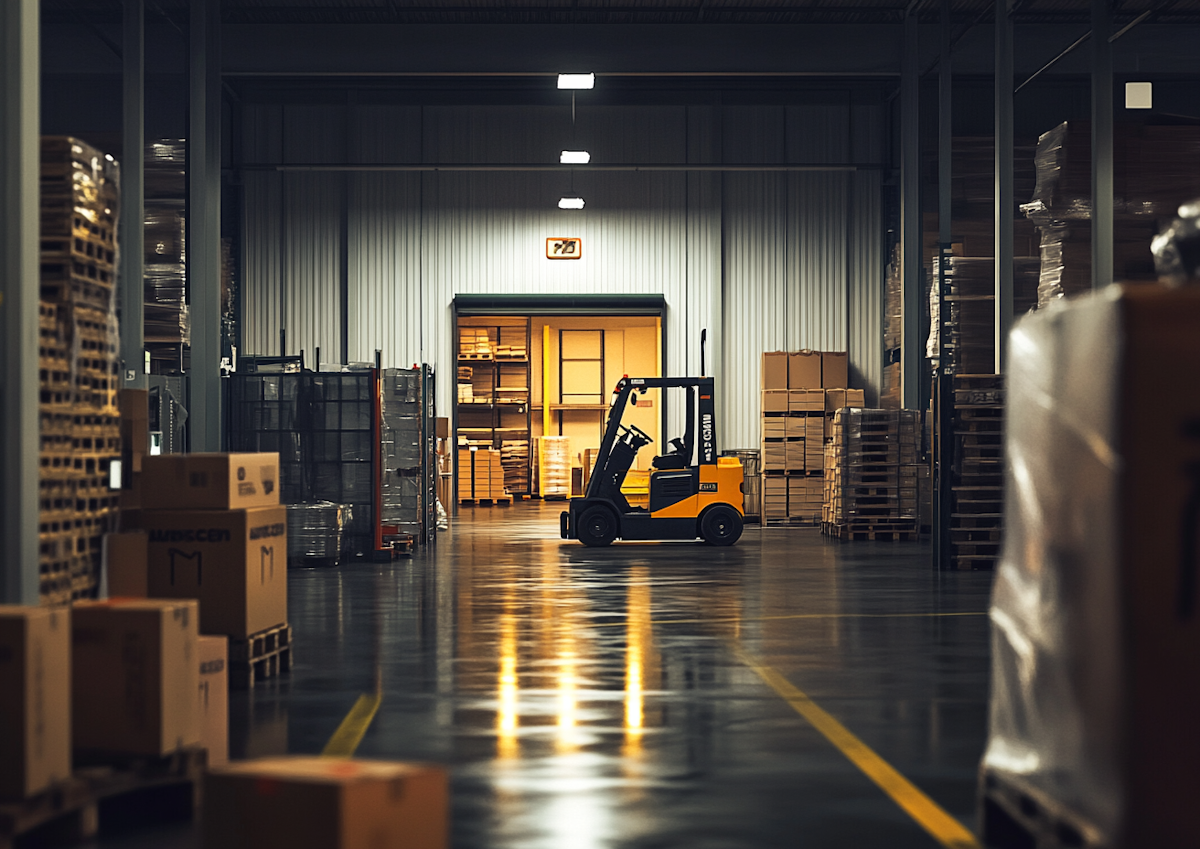
A leading Middle East logistics provider operating across multiple GCC countries faced increasing pressure to improve delivery reliability, customer visibility, and operational efficiency. With thousands of daily shipments moving through cross-border routes, ports, warehouses, and last-mile delivery networks, the company struggled to proactively manage disruptions and consistently meet customer delivery commitments. To address these challenges, the company implemented an AI-powered Logistics Control Tower that combines Predictive AI, Generative AI, and Agentic AI to predict shipment delays, identify root causes, and automatically recommend or initiate corrective actions before service levels are impacted.
The logistics provider faced several operational challenges:
Limited ETA Accuracy: Existing transportation systems relied on planned schedules and milestone updates, providing limited visibility into actual shipment arrival times. Customers and operations teams often discovered delays only after they had already occurred.
Cross-Border and Customs Delays: Shipments moving between GCC countries frequently encountered delays due to customs processing, documentation issues, inspections, and border congestion, creating uncertainty in delivery planning.
Manual Exception Management: Operations teams spent significant time manually tracking shipments, investigating delays, coordinating with carriers, and communicating updates to customers, resulting in slow response times and increased operational costs.
Poor Customer Visibility: Customers frequently contacted customer service teams for shipment status updates, leading to increased support workloads and reduced customer satisfaction.
The company deployed an AI-powered Logistics ETA Prediction & Delay Resolution Platform that continuously monitors shipment activity and proactively manages transportation exceptions.
Predictive ETA & Risk Intelligence
Machine learning models analyze shipment history, GPS data, route performance, carrier behavior, traffic conditions, weather data, and border wait times to predict:
Operations teams receive early warnings when a shipment is likely to miss its committed delivery window.
Generative AI Operations Copilot
A GenAI-powered assistant provides natural language explanations for shipment risks and delays.
Example:
"Shipment TRK-458 is expected to arrive 5 hours late due to extended customs processing and increased traffic congestion near the destination. Similar shipments experienced an average delay of 4–6 hours over the past 48 hours."
This eliminates manual investigation and accelerates decision-making.
Agentic AI Delay Resolution
When high-risk shipments are detected, autonomous agents:
This enables proactive exception management rather than reactive problem resolution.
Improved Delivery Performance
Faster Issue Resolution
Enhanced Customer Experience
Increased Operational Efficiency
Business Impact
By implementing an AI-powered Logistics Control Tower, the logistics provider transformed its operations from reactive shipment tracking to proactive and intelligent logistics management. The solution enabled the organization to predict delays before they occurred, understand their causes, and take corrective action automatically—resulting in improved delivery performance, enhanced customer experience, and significant operational efficiencies.